Sunday Executive Summary

A concise weekly briefing that ties it all together—highlighting the most important themes, shifts, and strategic insights across our research coverage.

Reports

Lights Out, Optionality On: Margin Defense Resets the Cycle, Execution Speed Decides the Winners

Prolonged petrochemical weakness reflects oversupply not demand collapse, extending the cycle and shifting strategy from growth to margin defense, cost-curve control, and execution-led recovery outcomes.

Integration, cash discipline, and balance sheet optionality differentiate winners, as diversified portfolios absorb volatility, limit irrational restarts, protect liquidity, and convert downturn efforts into advantage.

Read More »

No Free Pour: Liquidity Sets Chemical Markets

Liquidity governs commodity outcomes as volatility and freight normalization compress timing buffers, elevating focus on cash conversion discipline over utilization in 4Q25 results and 2026 outlooks.

Policy acts as a working capital catalyst, forcing cash outlays, creating basis risk, and rewarding companies integrating compliance, contracting, and treasury into disciplined, execution-focused

Read More »

You Can’t Handle the Freight: Logistics Normalization Shatters the Inflation Cover Story

China’s slowing consumption and persistently low relative price inflation push excess supply outward, reviving export-led clearing and intensifying global price competition as logistics increasingly normalize through 2026.

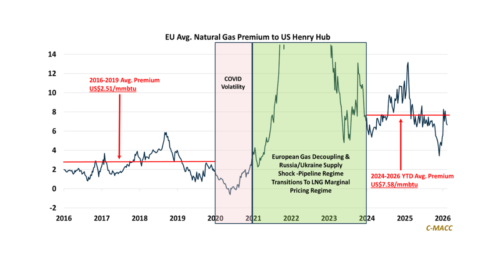
Red Sea normalization collapses freight premiums, restoring Asia’s cost advantage and accelerating import-parity pressure on Europe, undermining margin assumptions across chemicals, polymers, and

Read More »

I Walk the Line: Logistics Beat Capacity, Discipline Defines Returns

The fundamental health of the global ammonia market increasingly hinges on logistics, reliability, and timing constraints, making basis risk and seasonal timing more decisive than headline prices or announced capacity.

Hydrogen cost dispersion, more than policy design, shapes ammonia trade patterns, structurally favoring gas-advantaged regions despite persistent momentum around alternative

Read More »

The Heat Is On: Power Inflation, Low Expectations Test Chemical Investment Strategies Into 2026

Chemical sector outcomes in 2026 will hinge more on managing volatility across power, gas, and policy, not on forecasting averages, as infrastructure constraints and capital discipline dominate margin formation globally.

Electricity replaces fuel as the binding constraint, with sticky power inflation, grid congestion, and contracting structures reshaping industrial competitiveness despite

Read More »

From Growth Optionality to Return Gating: Capital Tightens The Filter

Capital allocation is increasingly shifting from speculative growth and volume chasing toward return gating, as firms demand contracted cash flows, controllable execution risk, and downside economics amid uncertainty.

Energy strategies increasingly monetize stability through integration and services, rewarding contract quality over installed capacity and production as compressed spreads and policy

Read More »

The Reset Effect: When Structural Strain Becomes Industry’s Strongest Tailwind

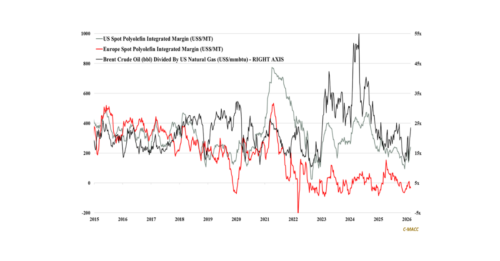
Collapsing ethylene co-product credits and stubbornly oversupplied polymer markets now erase traditional feedstock advantages, potentially positioning the industry for a 2026 reset offering underappreciated upside.

Global cost-curve flattening, cheap freight, and Asian oversupply have rattled historical pricing relationships, forcing producers to rethink return strategies as investors increasingly demand action to

Read More »

Sow, Crack, and Roll: Markets Quietly Replant Risk

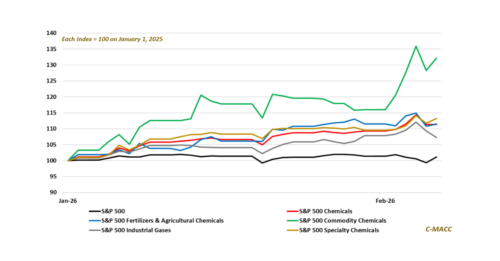
Depressed oil-to-gas ratios and elevated soy-to-corn prices shift chemical-sector risk profiles: commodity chemical underperformers in 2025 face low expectations in 2026, whereas agriculture faces the reverse.

Commodity chemical producers face multi-year-low per-unit margins, expectations of continued oversupply, and weak return profiles heading into a year that favors restructuring and increased

Read More »