Sunday Executive Summary

A concise weekly briefing that ties it all together—highlighting the most important themes, shifts, and strategic insights across our research coverage.

Reports

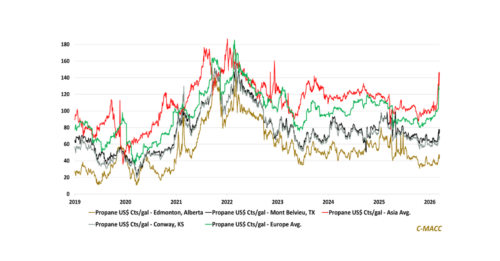
Propane Hits the Fan: Feedstock Shock Resets Propylene

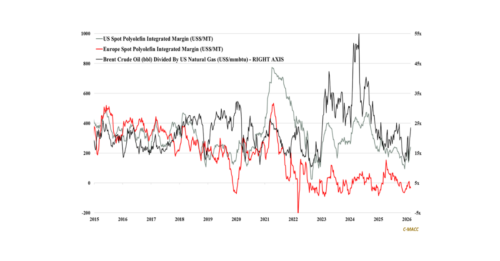
Asia and Europe now pay a structural propane premium as Middle East disruption risk lifts import costs, compressing PDH production margins abroad and reinforcing North America’s LPG feedstock advantage.

Expanding North American LPG export infrastructure is reshaping global trade flows as logistics depth and feedstock security increasingly determine petrochemical competitiveness

Read More »

Cheap Gas, Tight Capital: Petrochemical Expansion Remains Selective

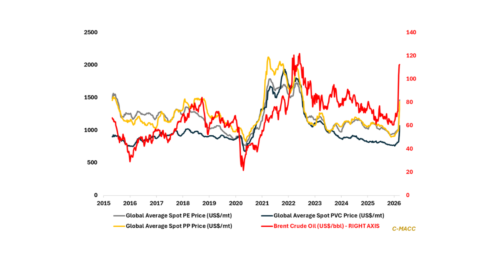
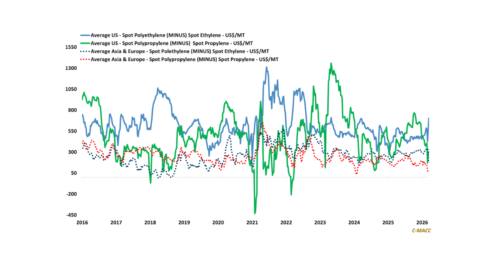
Surging crude prices and widening feedstock spreads are steepening the global petrochemical cost curve. Cheap regional gas and NGLs may support selective integration, but not a broad new build cycle.

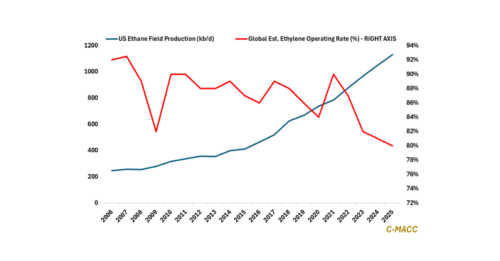
US ethane supply continues rising rapidly, yet global ethylene operating rates near the low-80% range still signal structural overcapacity and

Read More »

Crude Awakening: Carbon Bites, Crackers Blink, and Europe Gets Capital-Selective

Europe’s chemical sector return outlook now hinges far less on cyclical recovery and far more on feedstock structure, carbon exposure, and policy-backed demand durability amid heightened geopolitical volatility.

The sharp escalation in tensions in the Middle East introduces asymmetric upside risk to crude and LNG prices, disproportionately compressing Europe’s naphtha-heavy,

Read More »

Structural Dispersion Endures: Integration, Not Scale, Secures Superior Returns

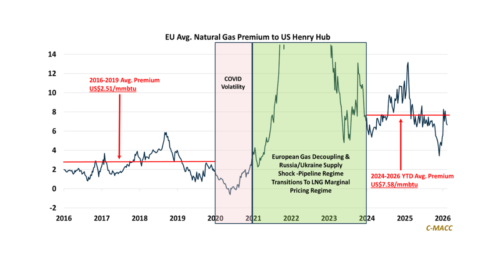
Persistent European premiums over Henry Hub confirm LNG marginal clearing as the dominant marginal price-setting mechanism, anchoring US export-linked gas economics and long-cycle infrastructure returns.

Integrated midstream systems convert dispersion and basin volatility into contracted earnings visibility, with storage depth and routing density increasingly more valuable than pure throughput scale.

Read More »

Against All Odds: When Signals Fade, Errors Compound

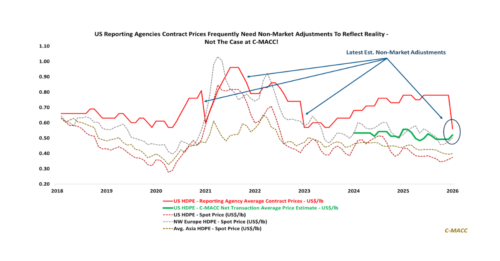
Are you underwriting capital and pricing decisions using benchmarks that periodically reset to reflect reality, or real-time intelligence that recalibrates risk before global and regional markets reprice your return profile?

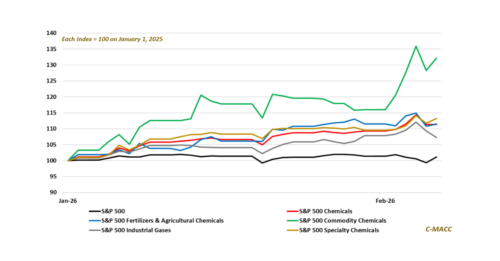
Weak commodity chemical equity performance reflects feedstock convergence, structural oversupply, trade frictions, and policy recalibration reshaping cost curves and returns,

Read More »

Sorry, the Cycle Won’t Save Everyone: Global Chemicals Get Smarter or Smaller

Cycles matter, but winners change as structure evolves; disciplined capital allocation separates chemical sector participants positioning for durable advantage from those who let pessimism delay investment.

Early 2026 commodity chemical margins reflect stabilization rather than a durable rebound, though intensive restructuring and self-help curb downside risk despite slow growth and

Read More »

Lights Out, Optionality On: Margin Defense Resets the Cycle, Execution Speed Decides the Winners

Prolonged petrochemical weakness reflects oversupply not demand collapse, extending the cycle and shifting strategy from growth to margin defense, cost-curve control, and execution-led recovery outcomes.

Integration, cash discipline, and balance sheet optionality differentiate winners, as diversified portfolios absorb volatility, limit irrational restarts, protect liquidity, and convert downturn efforts into advantage.

Read More »

No Free Pour: Liquidity Sets Chemical Markets

Liquidity governs commodity outcomes as volatility and freight normalization compress timing buffers, elevating focus on cash conversion discipline over utilization in 4Q25 results and 2026 outlooks.

Policy acts as a working capital catalyst, forcing cash outlays, creating basis risk, and rewarding companies integrating compliance, contracting, and treasury into disciplined, execution-focused

Read More »

You Can’t Handle the Freight: Logistics Normalization Shatters the Inflation Cover Story

China’s slowing consumption and persistently low relative price inflation push excess supply outward, reviving export-led clearing and intensifying global price competition as logistics increasingly normalize through 2026.

Red Sea normalization collapses freight premiums, restoring Asia’s cost advantage and accelerating import-parity pressure on Europe, undermining margin assumptions across chemicals, polymers, and

Read More »