The Hydrogen Economy #64
Methane Pyrolysis – Some Promise but It’s a Dirty Business
Key Points
- While there are pyrolysis startups, the more established Monolith is showing slowing momentum, and it is likely a function of construction costs and power availability and costs for “phase 2”. Is there enough cash left?
- Methane has the highest hydrogen content, but using pyrolysis cleanly requires low carbon RNG and renewable power – the cost of qualifying for 45V may make it more expensive than blue hydrogen with 45Q and credits.
- Some newer technology looks interesting – microwave-based energy and focusing on graphite as the co-product as examples – but these are currently small scale – not good for economics – good for the carbon black market.
- Hydrogen projects have regressed to predominantly small European initiatives where unit costs and power costs are high, especially if you manage for a high-capacity factor – other ideas may be stalling because of costs.
- We note a new grey ammonia project in the US in the news because it has received an EPA air permit – odd that the EPA will approve a CO2-intense ammonia project but no Class 6 wells for low carbon ammonia.
Exhibit 1: Methane has the highest hydrogen content and is a cost-effective way to transport hydrogen, but the natural gas needs to be low carbon renewable, and the power needs to be renewable – hence the challenge.
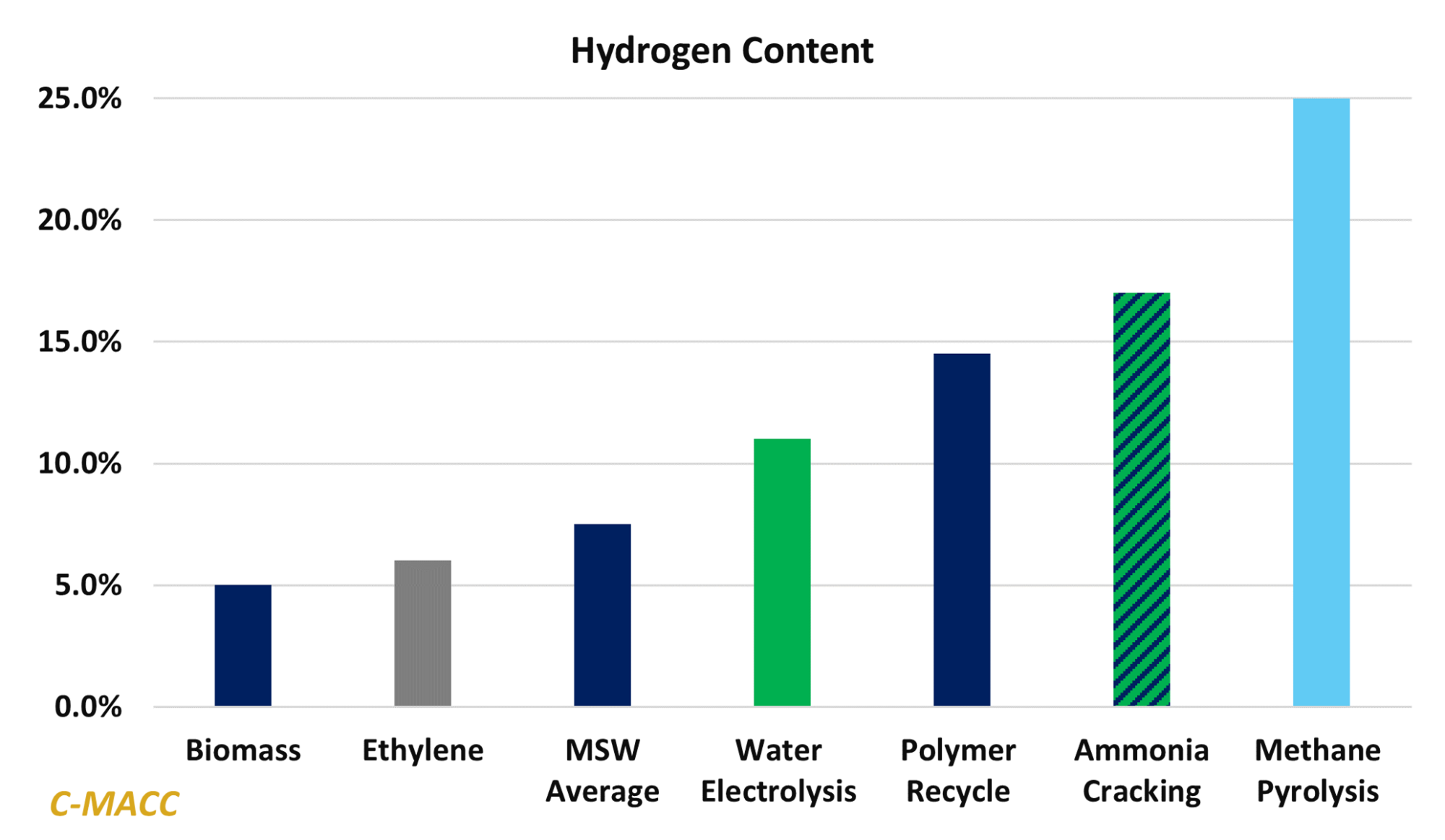
Source: Capital IQ and C-MACC Analysis
Client Login
Learn About Our Subscriptions and Request a Trial
Contact us at cmaccinsights@c-macc.com to gain full access and experience our services!