C-MACC Sunday Executive Summary
The Exit Interview: Chemical Plant Closures Can Leave Competition Standing
- Commodity chemical shares retain their lead as selected resin grades tighten, but delayed cargoes can lift prices before producers permanently reduce the capacity available to customers.
- Closing sites can release cash without reducing output; manufacturers that cut spending and successfully transfer production may recover faster than the markets they continue to supply.
- Acquisitions can improve earnings without reducing competition, making the persistence of customer orders more useful than a specialty label when judging what a chemical business is worth.
- Growth investment favors existing plants that can serve additional customers; new construction requires stronger evidence that demand will absorb capacity after temporary supply disruptions fade.
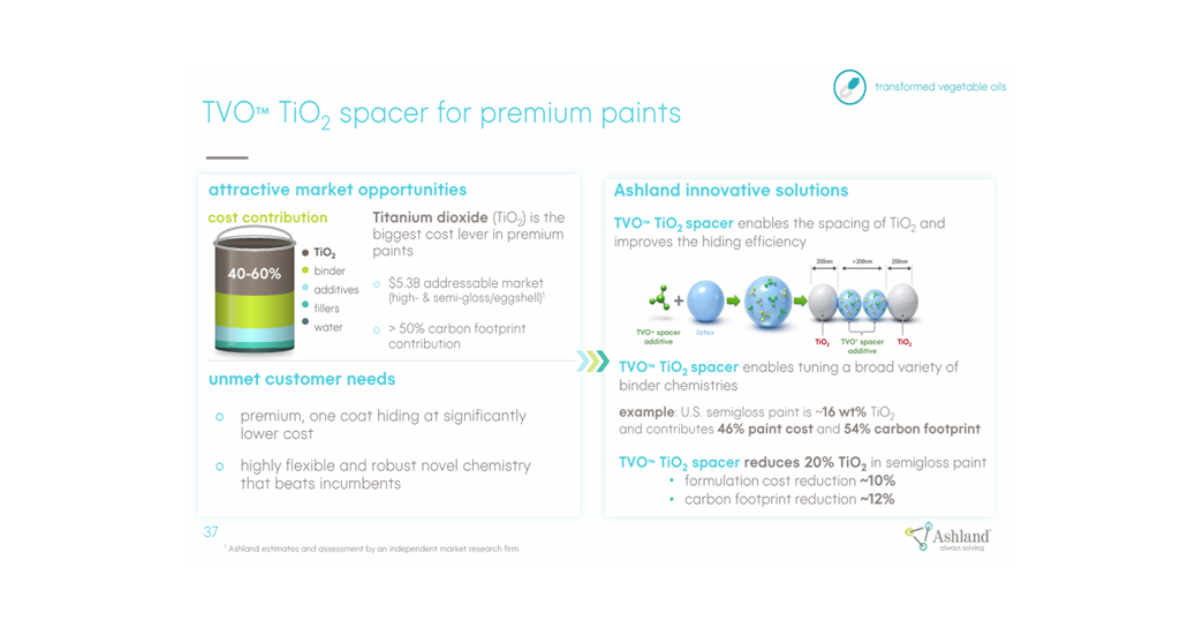
- Additionally, flexible feedstock sourcing can protect downstream margins, formulation changes can pressure pigment pricing, and stronger freight markets need not signal stronger industrial demand.
- Companies Mentioned: H.B. Fuller, Ashland, Evonik, BASF, Ancora, Wacker, Dow, Versalis, Borealis, TotalEnergies, Enterprise, Reliance, Tronox, Brookfield, Trinseo
- Products Mentioned: Oil, Polyvinyl Chloride, Polypropylene, Polyester, Coatings, MDI, Methanol, Ethylene, Diesel, Gasoline, Propylene, Naphtha, Sulfur, Phosphate, Sulfuric Acid, Copper, Nickel, LPG, Propane, Butane, Alkylate, Ethane, Titanium Dioxide, Vegetable Oil, Electricity, Bauxite, Alumina, Steel, Iron Ore, Bunker Fuel, Coal, Fertilizers
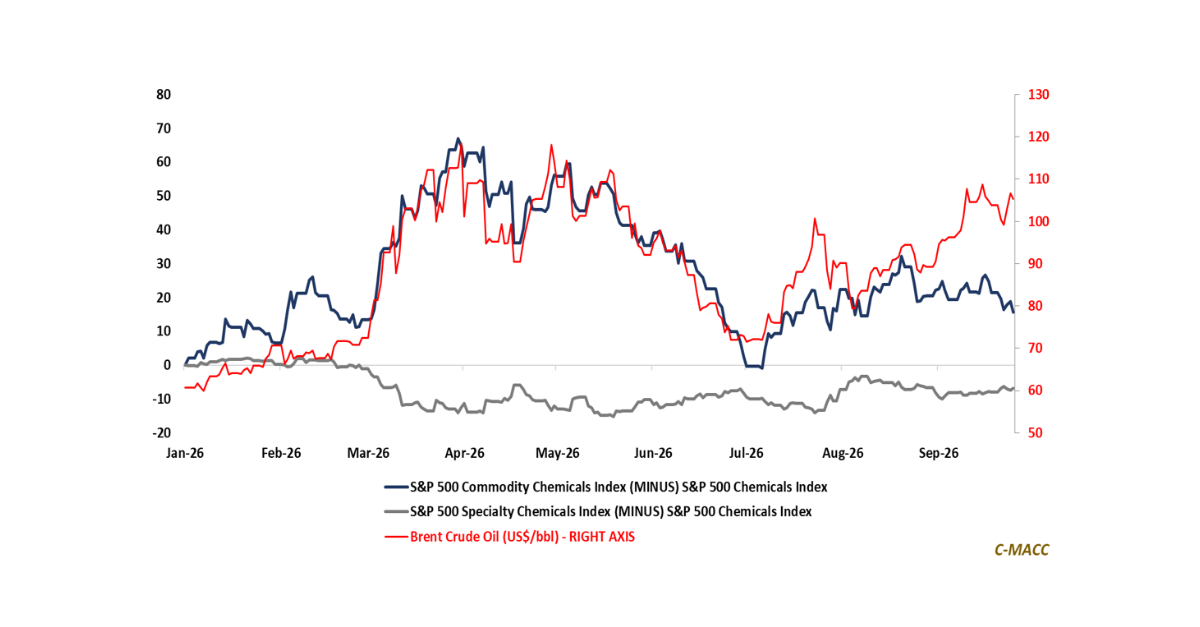
Exhibit 1: Commodity Chemical Shares Outperform Specialties Year-to-Date Without Proving New Plants Will Pay.
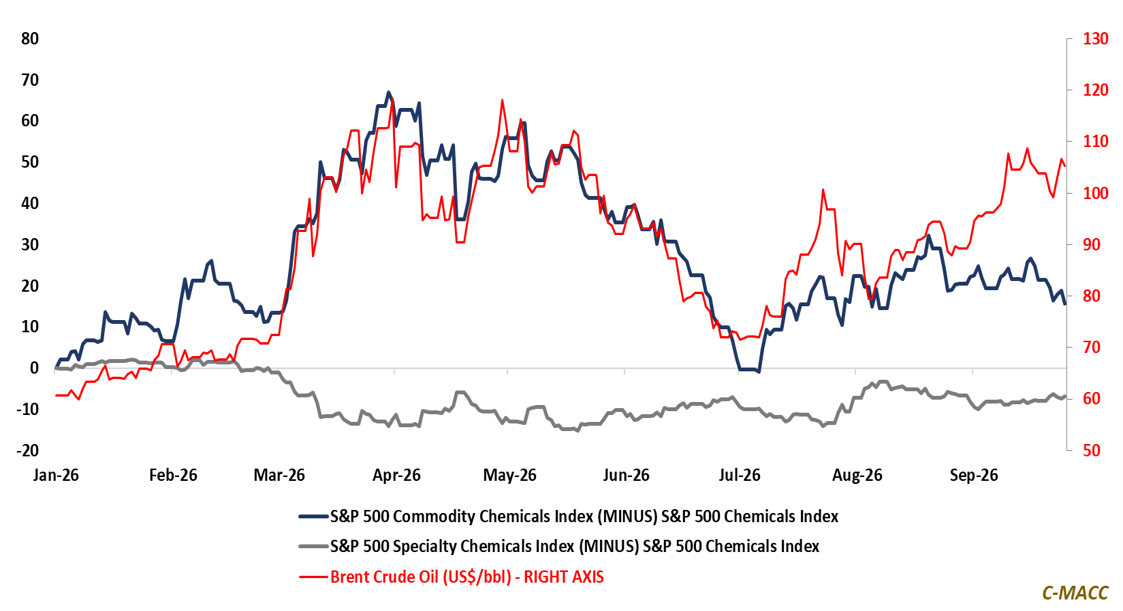
Source: Bloomberg, C-MACC Analysis, September 2026
See PDF below for all charts, tables and diagrams
Client Login
Learn About Our Subscriptions and Request a Trial
Contact us at cmaccinsights@c-macc.com to gain full access and experience our services!