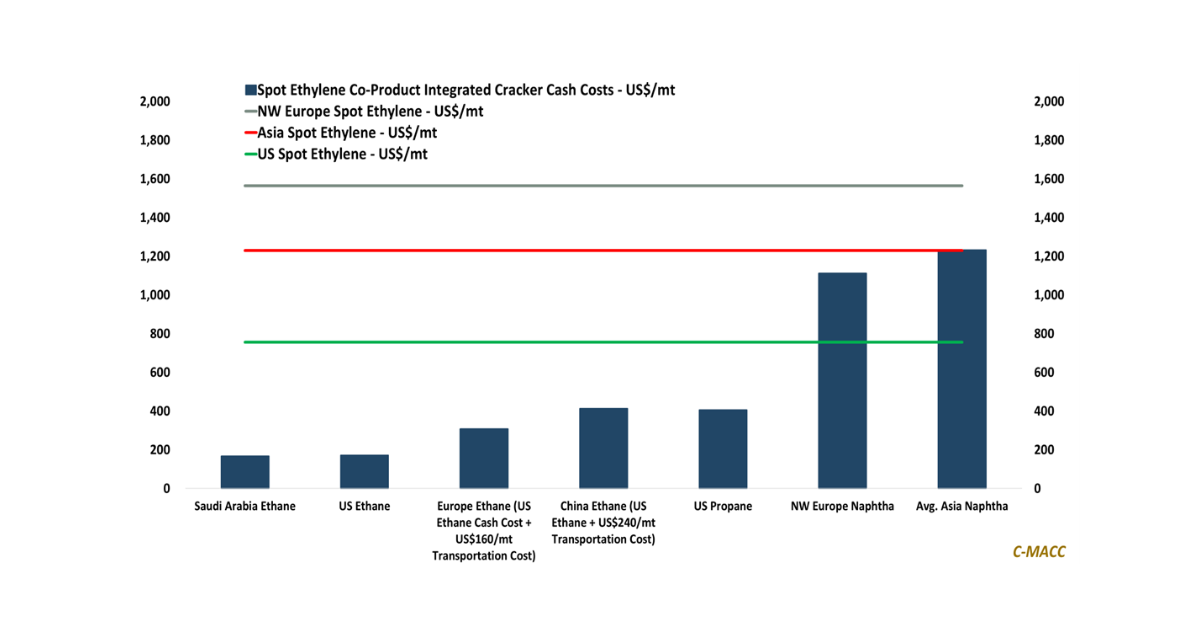
Sunday Executive Summary
Industrial competitiveness increasingly reflects access to qualified infrastructure, freight continuity, and grid execution rather than a nominal feedstock advantage or headline commodity pricing alone.
Europe’s

Industrial competitiveness increasingly reflects access to qualified infrastructure, freight continuity, and grid execution rather than a nominal feedstock advantage or headline commodity pricing alone.
Europe’s

General Thoughts: Industrial markets are rewarding companies that control logistics, feedstocks, and infrastructure, as volatility exposes the hidden fragility of supposedly diversified global supply chains.
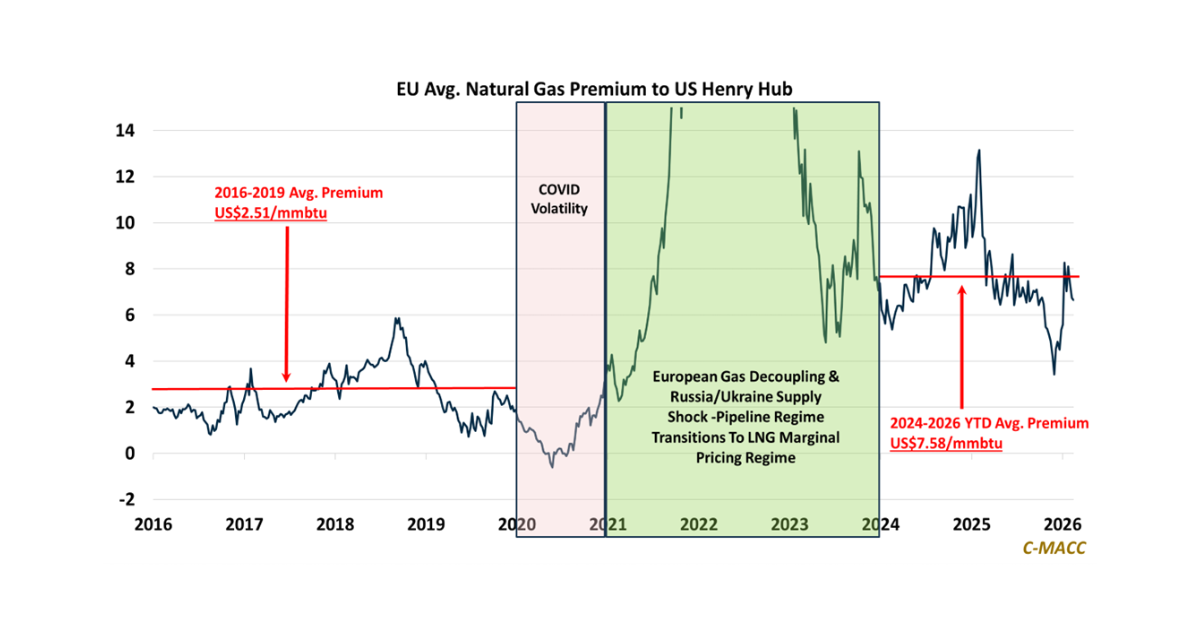
Persistent European premiums over Henry Hub confirm LNG marginal clearing as the dominant marginal price-setting mechanism, anchoring US export-linked gas economics and long-cycle infrastructure returns.

General Thoughts: Energy-linked corn economics and widening oil–gas dispersion are shifting global marginal cost leadership toward natural gas advantaged, capital-disciplined integrated production platforms globally.
Supply
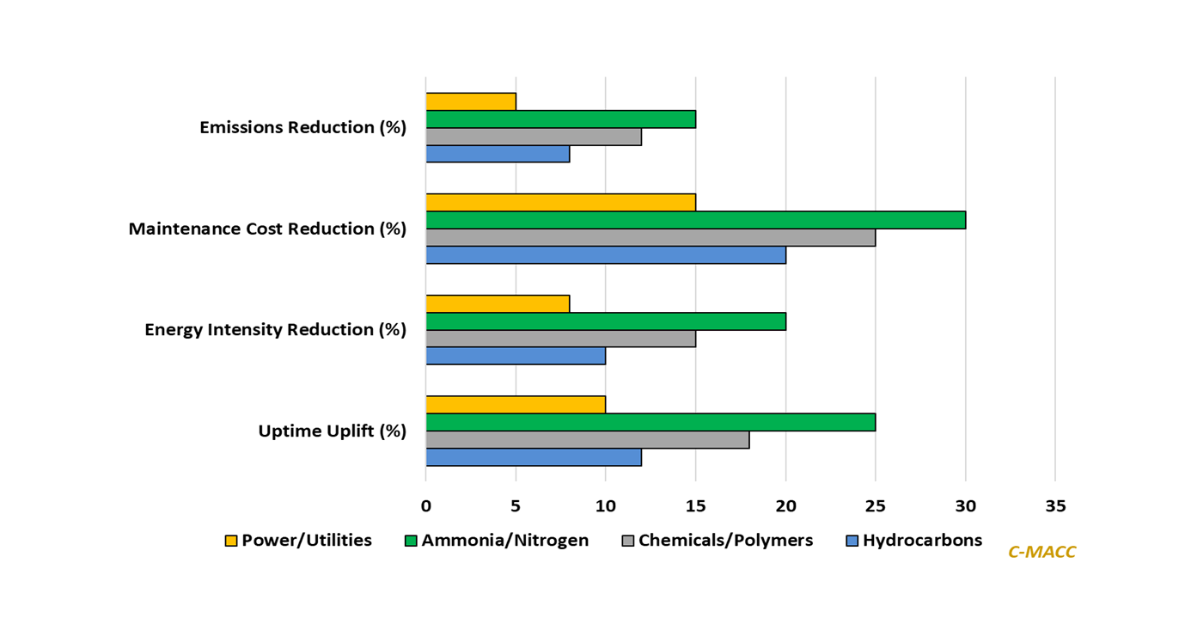
AI-driven stability converts volatile energy and chemical systems into more predictable cash engines, revealing structural advantage patterns that most operators still underestimate in a rapidly
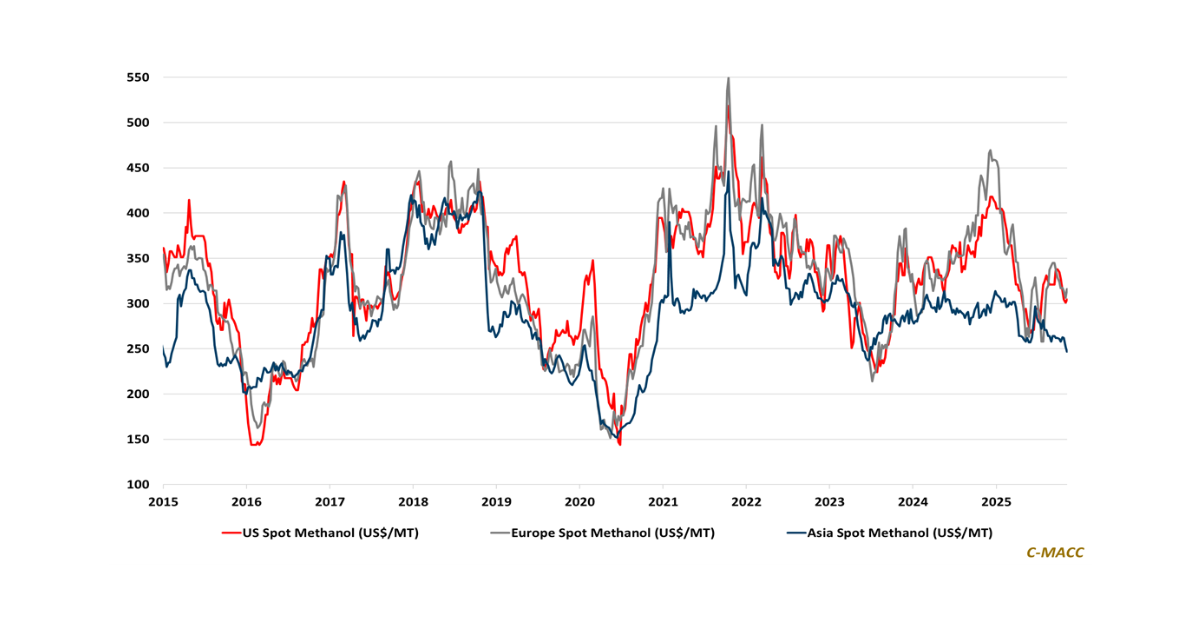
General Thoughts: Red Sea freight normalization could compress Western chemical market premiums, including for methanol, exposing cost curves, trade defenses, and discipline as differentiators in

C-MACC Sunday Executive Summary Return to Sender: Integration Rocks While Scale Rolls Away Exhibit 1: BASF pushes forward with its “winning ways” strategy, unlocking value

General Thoughts: Global cost curves are resetting as policy, infrastructure, and portfolios, not only supply, determine prices, with oil–gas divergence, freight deflation, and power markets
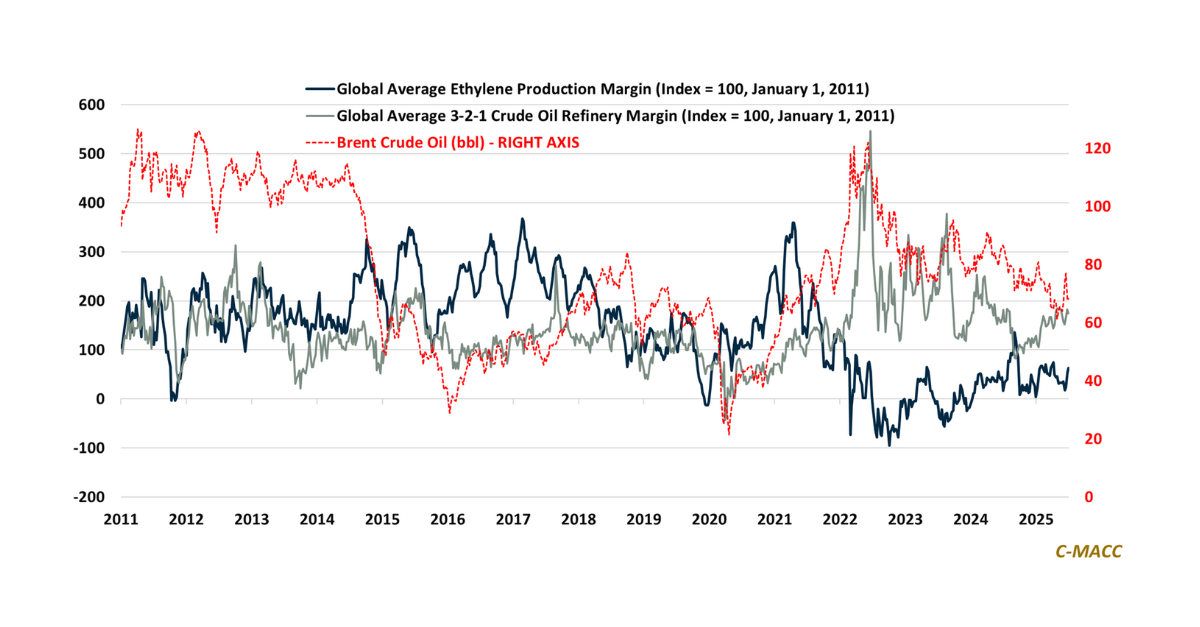
General Thoughts: Global refining margins have risen YTD on tight product balances, but chemical producers face persistent margin compression as oversupply, weak demand, and policy-driven
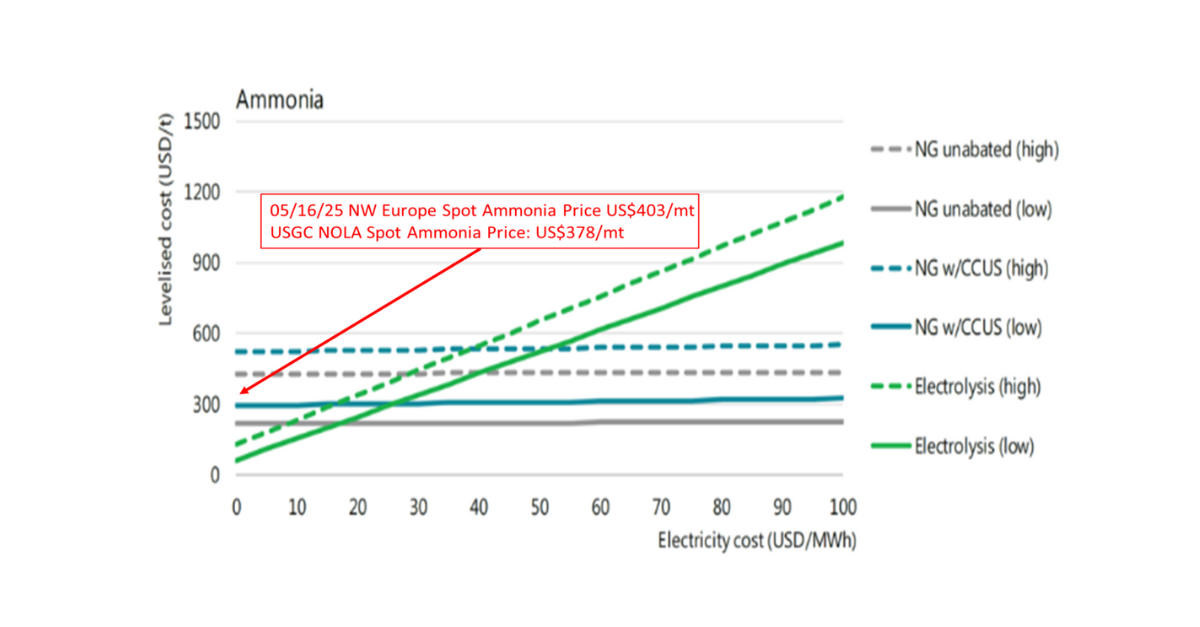
1st Topic of the Week: Low-carbon ammonia is a pragmatic decarbonization tool—connecting energy, agriculture, and hydrogen—as policy fragments and capital shifts; low-cost producers with global
